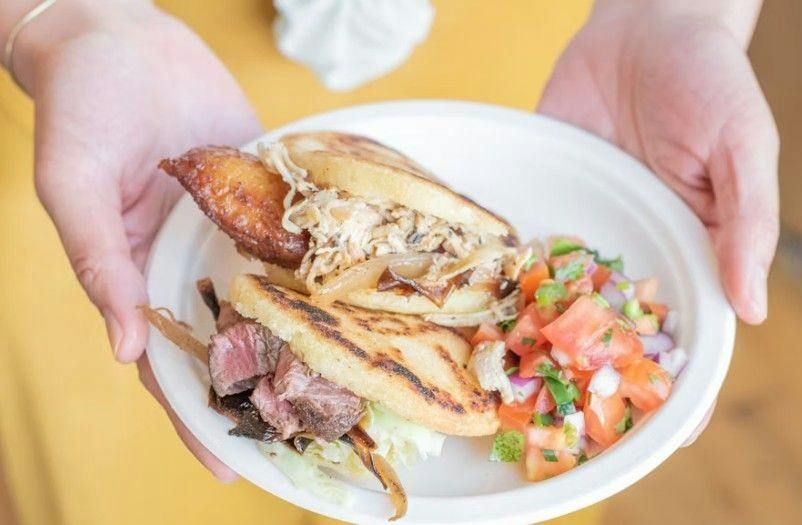
Colombian and Venezuelan arepas are cornerstone foods in their respective culinary landscapes, yet they feature distinct characteristics that reflect each country's unique food culture. Though sharing ancestral origins dating back to pre-Columbian indigenous peoples, these corn-based delicacies have evolved along different paths, developing into distinctive national treasures.
Both countries proudly claim arepas as iconic cultural symbols, yet clear differences have evolved in each's preparation, presentation, and consumption.
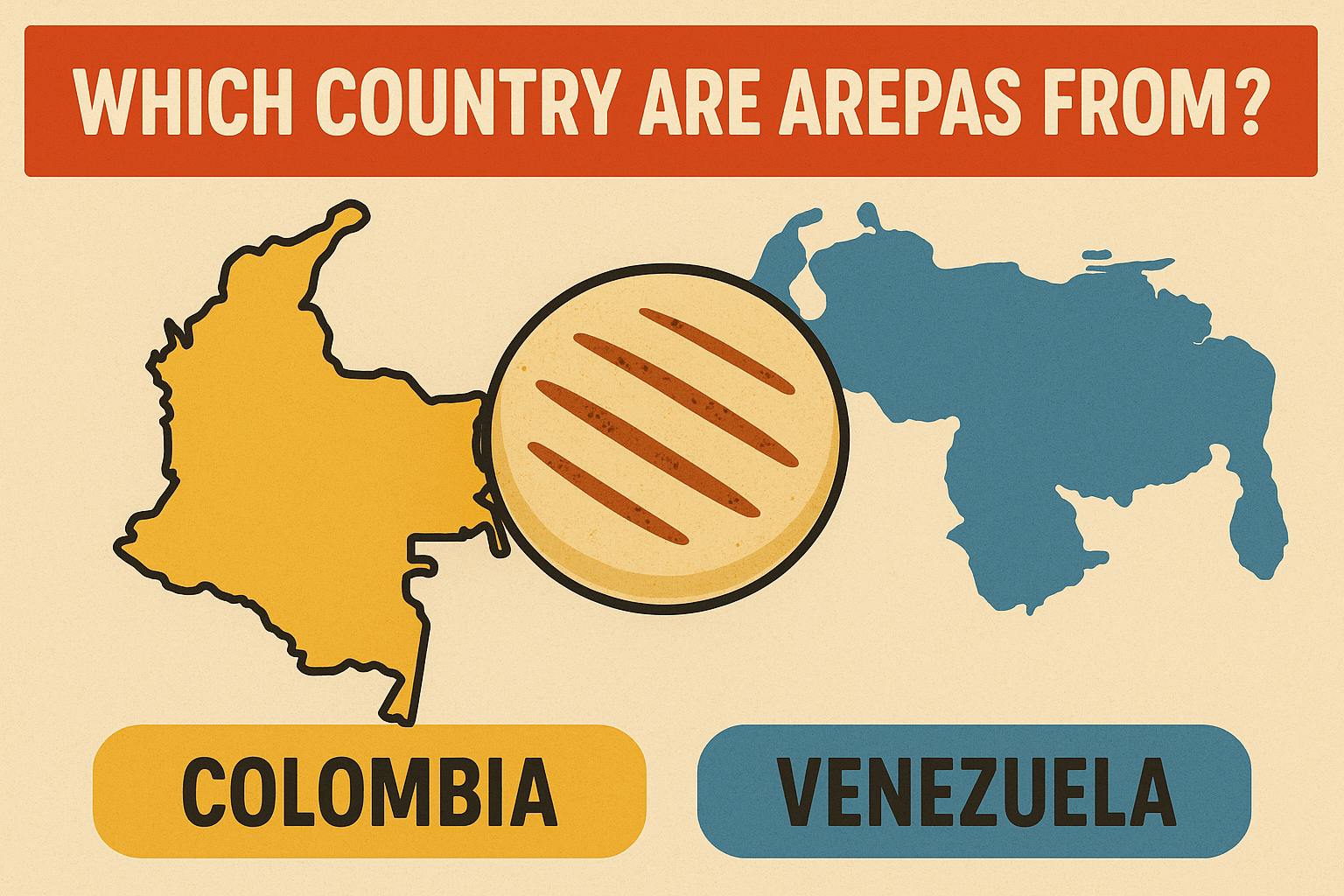
The Origins of Arepas
The word "arepa" comes from erepa, the indigenous word for corn.
Today, the world knows Arepas as flat, round, unleavened maize patties that have been consumed in northern South America since pre-Columbian times.
Archaeological evidence indicates that arepas were prepared and consumed by indigenous peoples inhabiting what is now Colombia, Panama, and Venezuela long before Spanish colonization.
This history and the passion of Colombians and Venezuelans has elevated this humble snack to global gastronomic status.
Colombian Arepas: Ingredients and Preparation
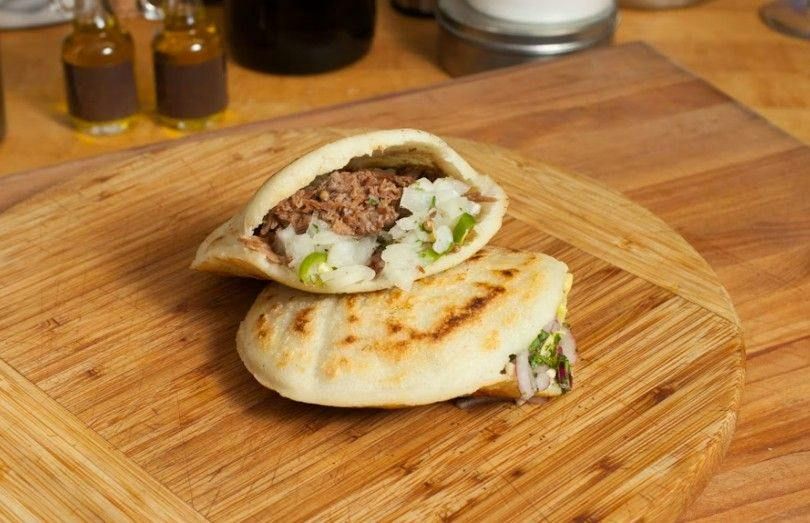
Colombian arepas are notably minimalist in their composition. They typically consist of just two ingredients: masarepa (precooked corn flour) and water. Some variations may include salt or incorporate cheese into the dough, but the fundamental recipe remains elegantly simple. Colombian arepas are generally thinner and larger than their Venezuelan counterparts, often measuring about 7-8 inches in diameter
Colombian Arepa Varieties
With more than 55 styles across its regions, Colombian arepas boast an impressive diversity. Each area has developed its own distinctive take on this national staple:
- Arepa Costeña: From the Caribbean coast, often fried and stuffed with eggs and grated costeño cheese. They may also be sweetened with sugar or panela and include anis.
- Arepa Santandereana: Made with dried corn, ash, chicharrón, and yuca, these grilled arepas have a distinctive bright yellow color.
- Arepa de Choclo: Sweet arepas popular in central Colombia, especially in departments like Antioquia, Santander, and Cundinamarca.
- Arepa Paisa: From the Antioquia region, these white arepas contain no filling or salt and are made with white hominy corn. They are characteristically thin and crispy.
- Arepa de Huevo: Egg-stuffed arepas from the Caribbean coast of Colombia
How to Eat Colombian Arepas
Colombian arepas primarily serve as side dishes rather than main courses. They are commonly eaten during breakfast but frequently accompany lunch and dinner as well. Colombians often use pieces of arepa to scoop up other foods, dip into stews, or treat them as open-faced sandwiches topped with cheese or meat. The focus is on the arepa as an accompaniment rather than a vessel for fillings.
Venezuelan Arepas: Ingredients and Preparation
Venezuelan arepas are typically made with precooked corn flour, water, salt, and often oil or butter. They tend to be thicker and smaller than Colombian arepas, creating the perfect pocket for generous fillings. Venezuelan arepas may be griddled, baked, fried, boiled, or steamed, offering greater preparation variety.
Venezuelan Arepa Fillings
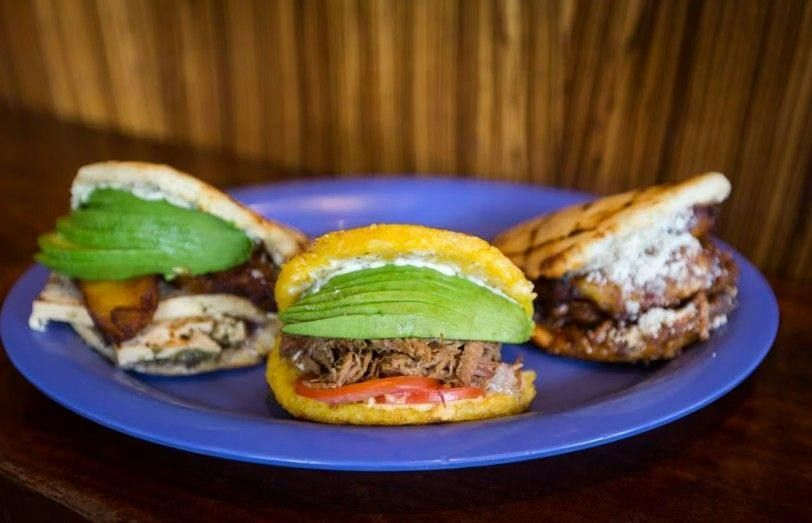
Venezuelan arepas are celebrated for their diverse and abundant fillings. They are traditionally split open and stuffed, functioning similar to pita pockets. Popular Venezuelan fillings include:
- De queso: Filled simply with cheese.
- Reina Pepiada: Shredded chicken mixed with avocado and mayonnaise.
- Sifrina: Reina Pepiada topped with additional cheese.
- La Pelúa: Filled with shredded beef (Carne Mechada).
How to Eat Venezuelan Arepas
In Venezuela, arepas occupy a central role in daily eating habits. According to a 2015 survey, nearly 70% of Venezuelans consumed arepas regularly. Unlike Colombian arepas, Venezuelan versions typically serve as main courses rather than sides. They're eaten throughout the day as both meals and snacks, creating a culture where these corn products can be found almost everywhere, including in specialized areperas.
Arepas are Perfect for Catering
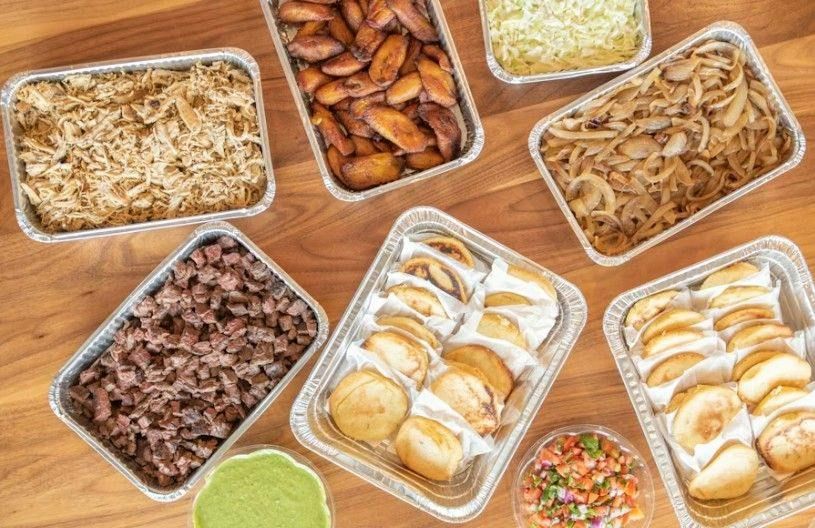
Arepas offer exceptional flexibility for catering events of all sizes, from small gatherings to large-scale functions like weddings and corporate events. Their adaptability makes them suitable for various catering formats, including build your own arepa bars, boxed arepa meals, buffet setups, plated meals, or simple arepa platters.
We recommend ordering 2 arepas per person to be sure you'll have enough food for a hungry crowd!
One of the strongest selling points for arepas in catering is their ability to meet diverse dietary needs:
- Gluten-free: Made from corn, arepas contain no wheat, making them perfect for guests with gluten sensitivities or celiac disease.
- Customizable: The dough can incorporate additional ingredients like chia seeds, flax seeds, rolled oats, or finely grated vegetables to enhance nutritional content.
- Vegan options: Arepas can remain completely plant-based with vegetable fillings, or accommodate omnivores with various protein options.
Arepas Offer Convenience and Practicality for Events
Arepas present practical advantages that make them ideal for catering operations:
- Make-ahead friendly: They freeze well, keep in the refrigerator, and can be reheated without compromising quality.
- No utensils required: When stuffed, arepas function as self-contained meals that guests can eat without cutlery.
- Portion control: They can be made in various sizes, from small appetizers to substantial meal portions.
- Stable temperature holding: Arepas maintain their quality at room temperature longer than many other foods.
Colombian vs Venezuelan Arepas in One Chart
| Feature | Colombian Arepas | Venezuelan Arepas |
|---|---|---|
| Main Ingredients | Masarepa (precooked corn flour) and water; sometimes salt or cheese in dough | Masarepa (precooked corn flour), water, salt, often oil or butter |
| Size & Thickness | Thinner and larger (typically 7-8 inches in diameter) | Thicker and smaller (typically 2-3 inches in diameter) |
| Texture | Crunchier, especially when grilled or fried | Softer, due to thickness and preparation methods |
| Preparation Methods | Griddled, grilled, sometimes fried or baked | Griddled, baked, fried, boiled, or steamed |
| Fillings | Rarely filled; most commonly plain, with cheese or egg in some regional types | Always split and stuffed with abundant fillings (e.g., cheese, shredded beef, Reina Pepiada) |
| Serving Style | Served as a side dish or accompaniment, often used to scoop or topped as open-faced sandwich | Served as a main course or snack, eaten stuffed like a sandwich |
| Varieties | Over 55 regional types (Arepa Paisa, Arepa de Choclo, Arepa de Huevo, etc.) | Focus is on fillings rather than dough variations; many named fillings (Reina Pepiada, Sifrina) |
| Cultural Role | Essential side dish, breakfast staple, symbol of national unity | Central to daily meals, iconic national symbol, found in specialized "areperas" restaurants |
| Commercial Availability | Widely sold in stores, supermarkets, and by street vendors | Traditionally homemade; store-bought less common, seen as less authentic |
| Consumption Occasions | Breakfast, lunch, or dinner as accompaniment | Eaten throughout the day as both meals and snacks |
| Notable Differences | Minimalist, rarely stuffed, wide regional diversity | Always stuffed, main dish, preparation variety, focus on fillings |
Order Arepas on CaterCow from:
- Four Brothers Venezuelan Kitchen (TX) - Individual Venezuelan Arepas and Arepas Platters
- Costas Latin Street Food (NY) - Breakfast Arepas and Arepas Platter
- Pica Pica (SF) - Venezuelan Arepas and Family-Style Arepas